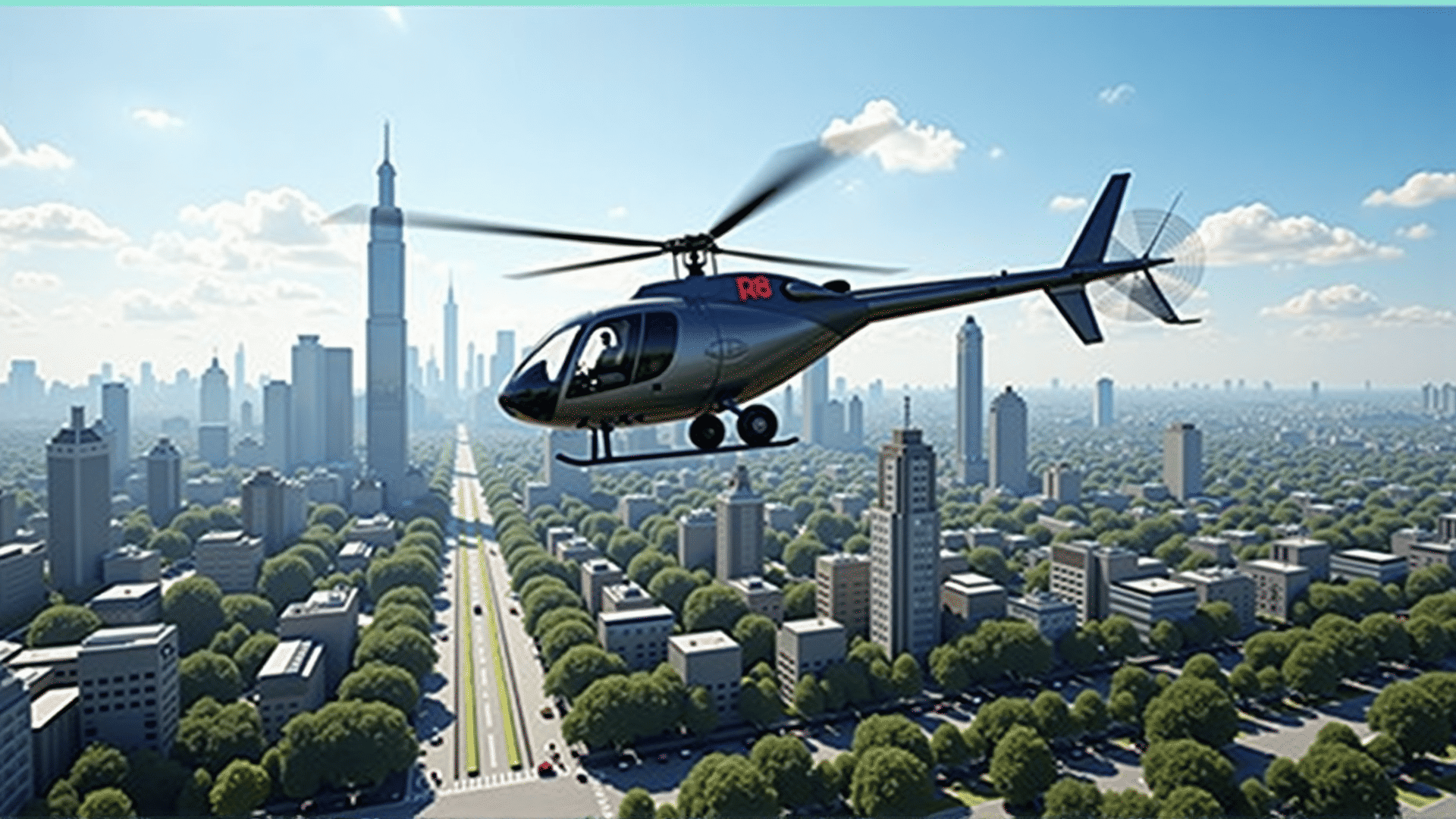
In recent years, the realm of aerial mobility has been undergoing a transformative shift, driven largely by groundbreaking advancements in helicopter technology. These innovations are paving the way for a future where urban transportation is not only faster and more efficient but also more environmentally friendly and accessible.
One of the most compelling advancements in helicopter technology is the development of electric vertical takeoff and landing (eVTOL) vehicles. These aircraft, powered by electric propulsion systems, represent a significant leap towards sustainable aviation by drastically reducing carbon emissions compared to traditional helicopters. The quiet operation of eVTOLs also addresses noise pollution concerns, making them suitable for urban deployment where noise is a key consideration.
Moreover, the integration of cutting-edge automation and artificial intelligence is reshaping how helicopters are operated. Advanced navigation systems and autopilot capabilities enhance flight safety and efficiency, minimizing human error and allowing pilots to focus on strategic decision-making. In some instances, these technologies also lay the groundwork for completely autonomous aerial vehicles, which could redefine personal and commercial air transport.
Another exciting development is the increasing use of lightweight composite materials in helicopter manufacturing. These materials significantly reduce aircraft weight without compromising structural integrity, leading to enhanced fuel efficiency and greater payload capacity. The utilization of composites with embedded sensors also opens doors for real-time monitoring and maintenance, ensuring the reliability and longevity of these advanced flying machines.
The concept of urban air mobility (UAM) is gaining traction, with several companies and cities collaborating on pilot projects to introduce air taxi services. These initiatives aim to alleviate urban congestion by providing rapid commute options over short and medium distances. As infrastructure evolves to accommodate these services, including vertiports and seamless integration with existing transportation networks, the dream of a sky-bound commute comes closer to reality.
Safety remains a paramount focus in the development and deployment of these innovative helicopters. Engineers and manufacturers are working diligently to innovate within stringent regulatory frameworks, ensuring that these new technologies meet or exceed current safety standards. Collaborations with aviation authorities worldwide are crucial to achieving a harmonious integration into airspace and urban environments.
In summary, the innovations in helicopter technology are setting the stage for a revolution in aerial mobility. With a blend of sustainability, automation, and advanced materials, these new-generation choppers are poised to change the way we navigate urban spaces. As we venture into this exciting future, the possibilities for enhancing urban transportation appear limitless, promising a more connected, efficient, and greener world.