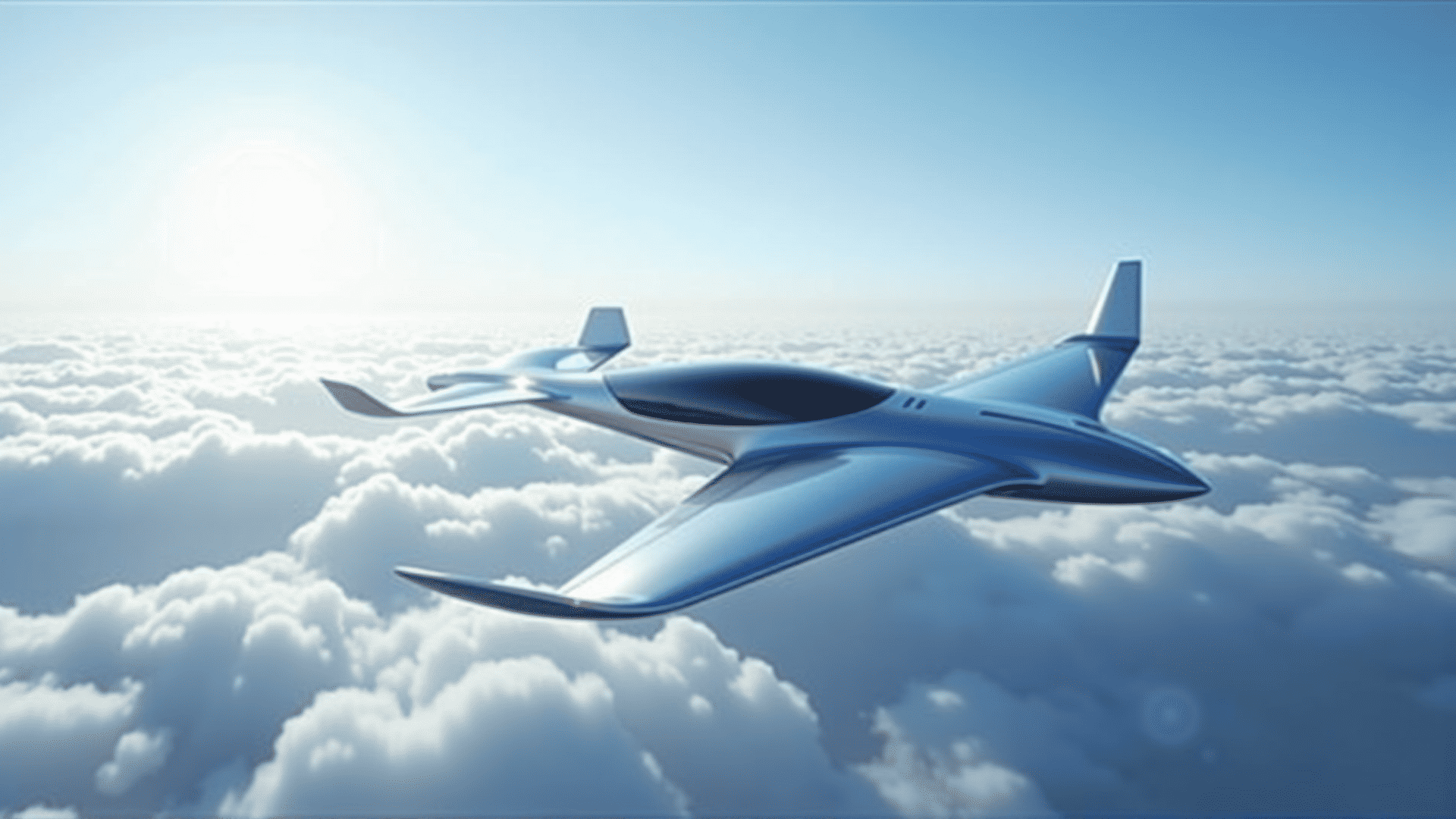
As we soar into a new era of flight, the aerospace industry stands on the brink of monumental transformation. Innovations emerging from research labs and workshops around the globe are set to redefine not just how we travel, but how we understand the concept of flight itself.
One of the most exciting arenas of advancement is the development of electric and hybrid-electric aircraft. Companies and researchers are focusing their efforts on reducing the reliance on fossil fuels. By harnessing the power of electric engines, these aircraft aim to significantly cut emissions, leading to a greener and more sustainable mode of air travel. Moreover, the reduced energy consumption and maintenance costs associated with electric engines promise an economic revolution in the industry, making air travel more accessible to a wider audience.
In tandem with electric propulsion, innovation in autonomous flight technology is rapidly advancing. Drones and unmanned aerial vehicles (UAVs) are becoming increasingly sophisticated, integrating AI systems that allow for seamless navigation and decision making. This autonomy not only holds the potential to transform commercial air travel but also paves the way for quicker, safer, and more efficient freight and delivery services. The integration of machine learning and real-time data analysis is critical here, enabling autonomous systems to adapt and respond to changing atmospheric conditions with remarkable precision.
Additionally, the advent of supersonic and even hypersonic travel is capturing the imagination of engineers and futurists alike. Companies are exploring aircraft designs capable of dramatically reducing travel time across the globe. Innovations in aerodynamics and materials science are key to overcoming the challenges posed by high-speed travel, such as managing heat and pressure. If realized, these advancements could shrink continents and redefine global connectivity, making once-distant corners of the world accessible in just a matter of hours.
The potential of advanced materials is another significant game-changer. The use of lightweight, durable composites and the exploration of nanotechnology in material sciences have enabled the creation of more efficient and resilient aircraft. These materials offer strength and elasticity, allowing for novel aircraft designs that improve fuel efficiency and safety.
Moreover, the implementation of advanced air traffic management systems promises to enhance the efficiency and safety of our skies. By utilizing satellite technology and AI-driven analytics, air traffic is set to become more streamlined and less congested, reducing delays and optimizing flight paths. This overhaul of traditional air traffic control systems is essential to accommodate the increase in air travel and the introduction of novel aircraft types.
As these technologies continue to develop and converge, the aerospace industry stands on the cusp of a revolution. The future of flight technology promises a world where air travel is not only faster and more efficient, but also environmentally friendly and universally accessible. With each innovation, we move one step closer to a future where the sky is no longer the limit.